Copper Beech – Wed 20th April
Glastonbury’s town centre is home to trees we walk past every day, but often go unnoticed and underappreciated. This guided walk intends to shine a light upon some of those trees who stand in the town’s streets, gardens and churchyards: a collection that, while modest, brings beauty amidst the concrete throughout the seasons.
The accompanying map labels some of the most significant trees, but is far from exhaustive. All the trees listed are within a few minutes’ walk of the town centre and therefore I have not made a suggested route, but encourage you to explore the paths and lanes in search of the trees, no doubt discovering more along the way.
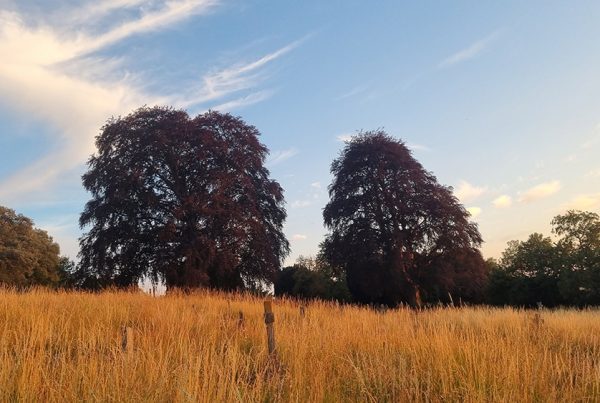
Most notable of the trees within the town centre is perhaps the large copper beech on Magdalene Street, one of the biggest trees in Glastonbury. It stands in the walled garden of an old hotel, now converted into flats. The picturesque canopy is visible from the alleyway of St Margaret’s Chapel and more closely from the back of St Mary’s Church, leading to Morrisons car park.
This is one of many mature copper beech trees in Glastonbury, a favoured cultivar of the Victorian period. It sits above a flow of water that leaves the Abbey fish pond, runs beneath Magdalene Street, where once stood the town’s gatehouse, beneath the pump house and pours out into a culvert from beneath the feet of the grand old tree. Beech trees are quick-growing; a 4.5 m-girth tree might only be 200 years old. It’s quite tempting to speculate that the tree was planted when the hotel was built, though there’s no evidence for this.
Rare are trees of such stature in the bounds of the town centre. Planning rules and insurance premiums make it difficult to allow larger trees to be planted too close to buildings and underground infrastructure. With a few exceptions, a range of smaller trees occupy the streets and side lanes of Glastonbury town centre.
Right in the heart of town, around the Market Cross, two small trees grow in tree guards. One is a Swedish whitebeam and the other a rowan, known as the memorial tree, a place where photographs and tributes are hung to those now deceased. Across the road stands another larger whitebeam alongside a rowan planted in the large brick planters. Both species perform well as decorative street trees, with various points of sensory interest throughout the seasons: aromatic white blossom in spring, showy leaves and red fruits in summer, and bright autumnal colour changes.

 On the left of the High Street, in one of Glastonbury’s side lanes called The Gauntlet, a black walnut overhangs much of the alleyway. This tree adds a lot of character to this little passageway and, in late summer and autumn, walnuts can be found on the floor. The black walnut changes to a bright yellow in autumn, and at this time a visit to the Glastonbury Tribunal is perhaps the best way to appreciate the tree. It stands in their garden, backed by a yew hedge and accompanied by a young Glastonbury Thorn.
Continuing through The Gauntlet leads us into St John’s car park, home to three London planes occupying the centre of the western end. Around the toilet block are three young limes, two coppiced and vigorously shooting. Next to the old relocated railway-station shelter is a Norway maple and, at the other end, closest to the church, stands a mature black locust, a non-native tree with delicate pinnate leaves, dangling pea-like flowers and, on its basal growth, some of the meanest thorns you’ll find on a tree.
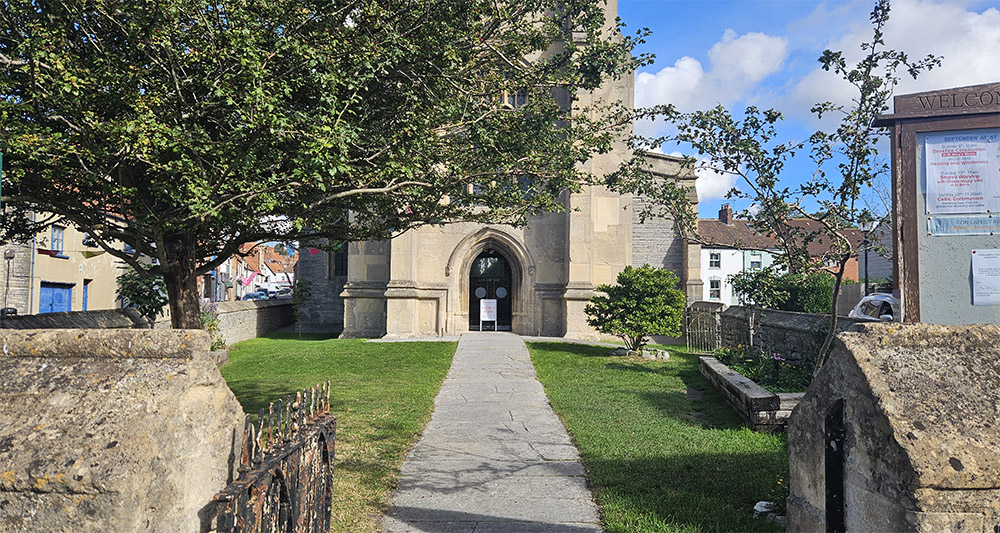
At the top of the car park in front of the church stand two large silver birches. The combination of birch and church here makes for elegant photos, as the hanging branches sway to reveal the extravagant underlying architecture of St John’s church tower.
At the front of the churchyard are further whitebeams, one next to the gate and another, a Swedish variety, in the opposite corner. From here we can also enjoy the five silver birches planted on the High Street in front of the Co-op, which bring an important splash of green onto Glastonbury’s main strip.
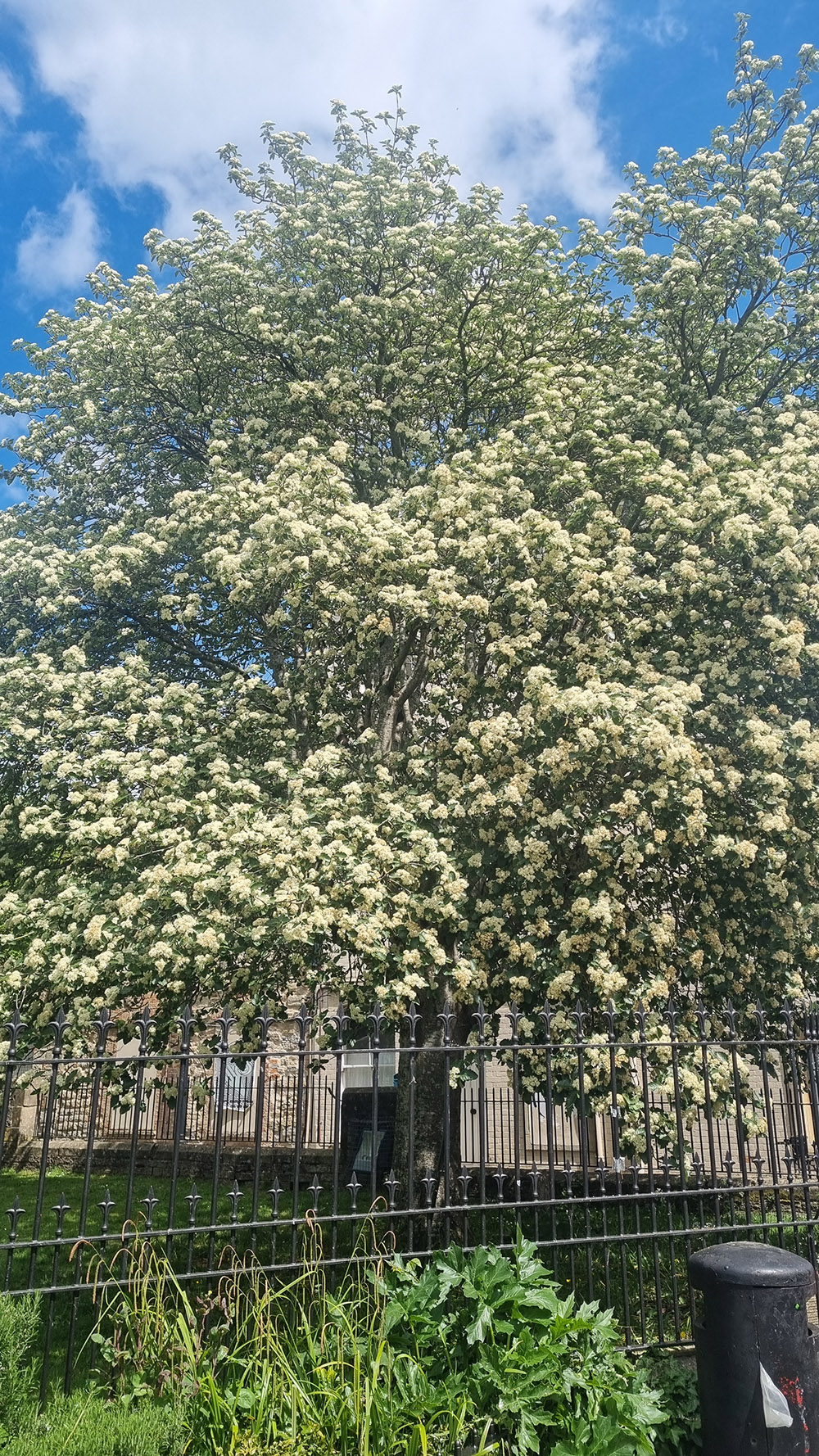 The planting of whitebeams in the town is given some context when we learn that whitebeams have an unusual reproductive pattern that means they readily create hybrids with rowan, wild service and with other whitebeam hybrids. Many of these hybrid whitebeams can then reproduce through a process that produces seeds without normal fertilisation and allows a successful form to effectively replicate itself from one generation to the next without further mixing through hybridisation.
Nearby in Cheddar Gorge, this very thing has occurred. The Cheddar whitebeam (Aria cheddarensis) is considered a native species to the gorge, with only around 20 specimens living within its rocky crags. The precise ancestry of the Cheddar whitebeam is uncertain; genetic studies point towards other native whitebeams such as rock whitebeam and grey-leaved whitebeam as possible ancestors.
In St John’s churchyard, the common whitebeam, Sorbus aria, and Swedish whitebeam, Sorbus intermedia, can both be found. The Swedish whitebeam possibly showing ancestry from three different lineages: whitebeam, rowan, and wild service tree.
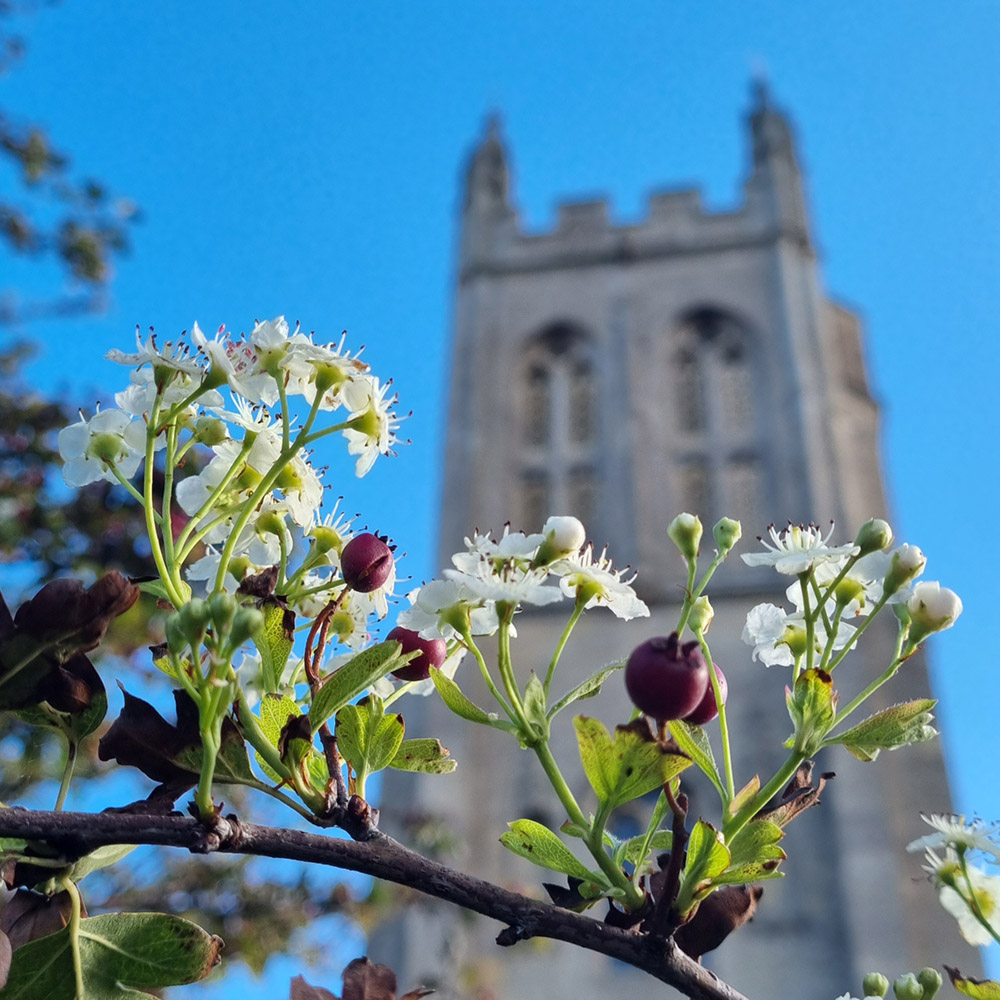
These trees are accompanied by a cherry, a crab apple, some holly relics and two Holy Thorns, one of which is a young whip. When the church is open, it is possible to visit the yard at the back, where one finds a yew of some 100+ years, an accompanying cedar and a nicely developing oak.

Sadly, St John’s has no ancient yew. Pictures of the church front from the early 1900s show one possible yew tree, along with what appear to be other managed shrubs, but none survive from this time, and it’s not possible to tell the age of the trees pictured.
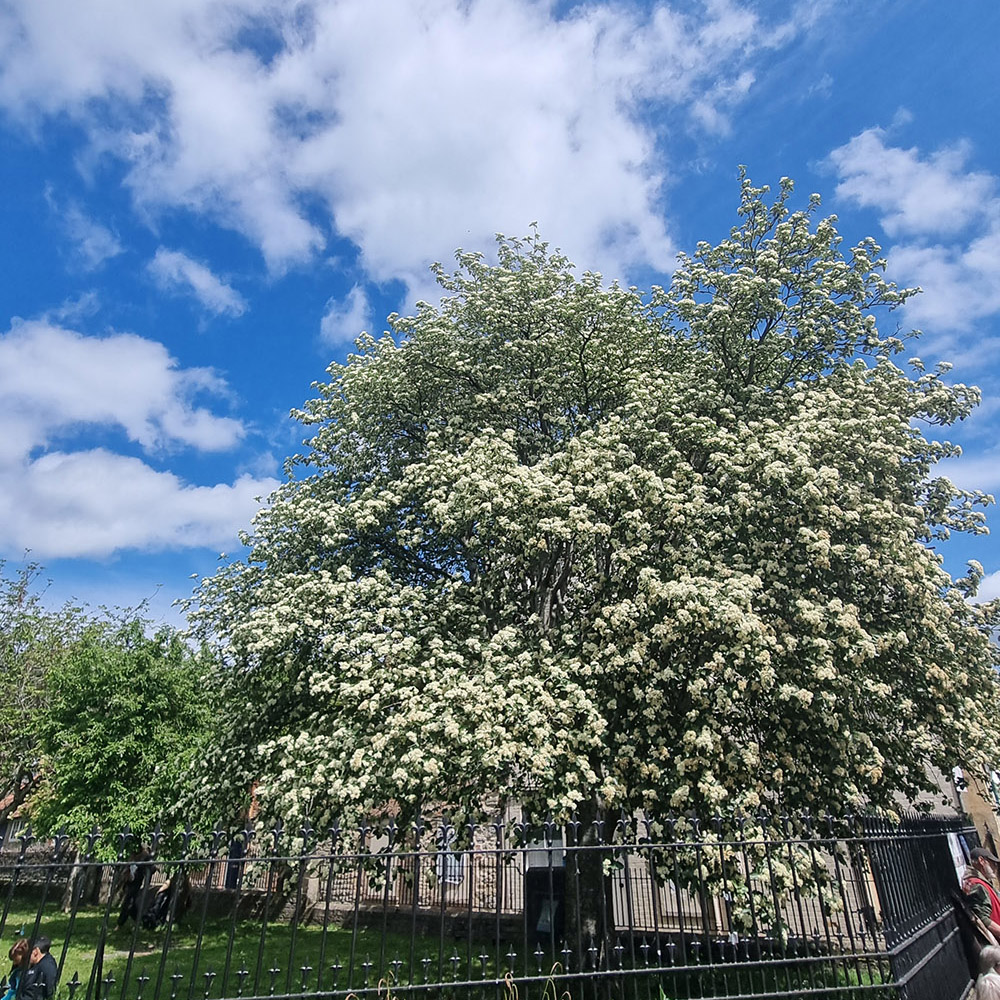
Probably the most notable tree in the churchyard is the Holy Thorn itself, a cultivar of the native may thorn with a bi-floral behaviour that brings blossom in wintertime. This cultivar is deeply embroiled in the myths and legends of Glastonbury, its Christian and pre-Christian heritage, but that’s a topic for another time. Suffice to say that at Christmas a sprig is cut and sent to the monarch. Quite the significant tradition.
 Leaving the churchyard, we turn back down the alleyway, past the birches and into an alley leading to Norbins Road.
If one is interested in magnolias, then Norbins Road is a treasure trove, in early spring the front gardens are awash with huge white flowers of various magnolia cultivars, and the view up the road towards the church is especially enjoyable.
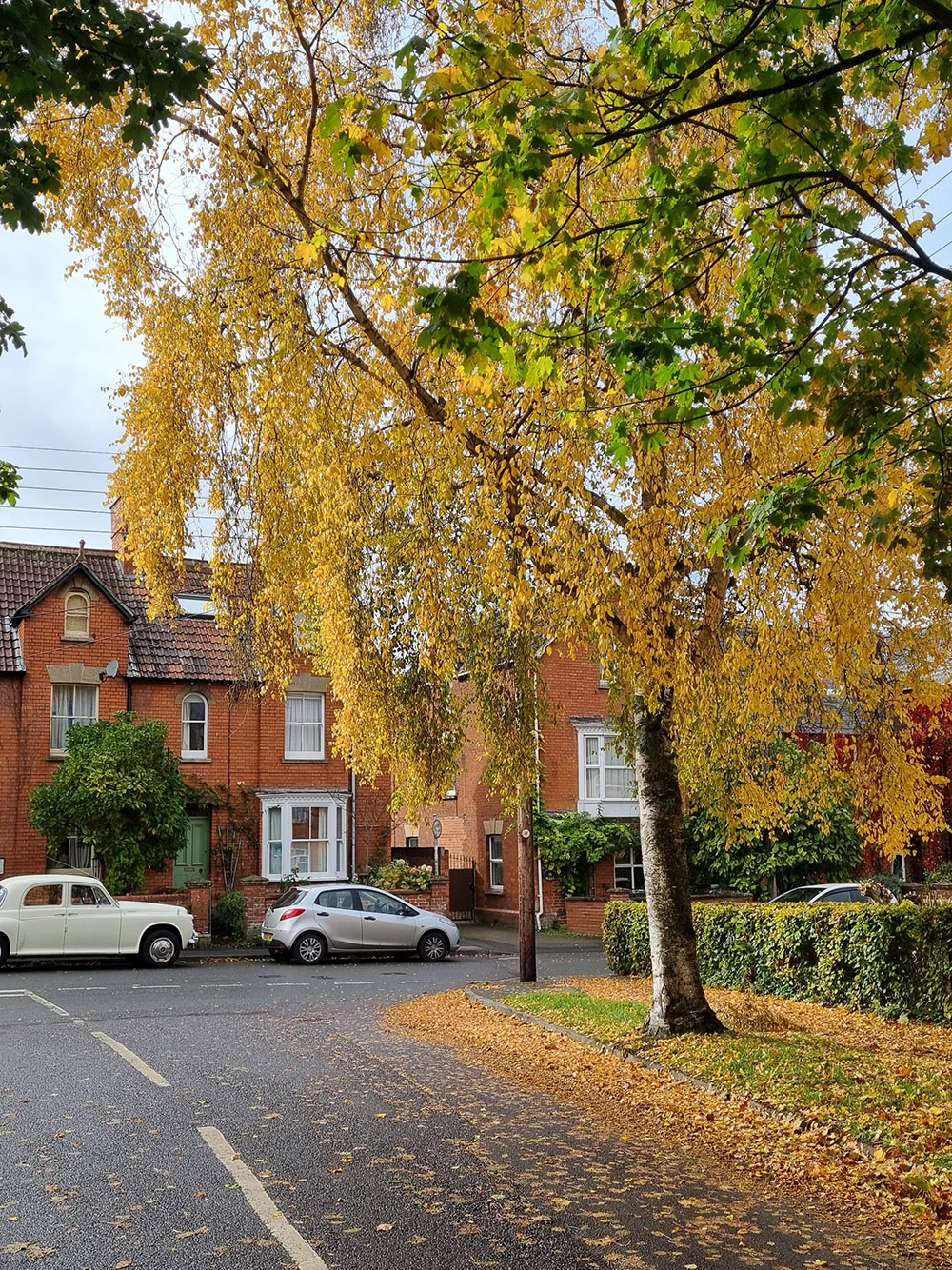
Halfway down the road is a silver birch of some height. This tree has beautiful draping foliage, which causes me to wonder whether it is a particular cultivar. As well as having the naturally pendulous nature of silver birch, it has an added weeping quality that allows its branches to fall like curtains, in a more uniform and lengthy fashion.
Turning right onto St Edmund’s Road, various other trees including birch, field maple, Norway maple and pear, lead us up the slope, where we meet an avenue of notable field maples making this one of the shadiest lanes in the town. Field maple is often seen as a bushy hedgerow tree, in this case they grow as standard trees with singular trunks and developed canopies and are suitable because of their reserved medium size when fully grown, and for their striking yellow autumnal change.
Heading left, we find a number of interesting species in private gardens, with yews reaching out from the left-hand side. We pass the large pine tree, then an apple and a walnut before the cross roads. From the junction a large cypress can be seen about 50 yards up Bove Town on the left, a tree of admirable structure, but which has gained this stature in a matter of decades and supports little native ecology.
We’ll continue past the cherry onto Lambrook Street, home to more magnolias and rowans, and turn right onto Silver Street. We often find rowan’s planted next to houses and in front gardens as they are said to be proactive trees and to ward of any malicious magical intent.
On Silver Street, Behind the Abbey wall sit a number of mature trees, most notably, on the corner, a mature elm, quite inconspicuous until one finds its round papery seeds decorating the floor like springtime confetti. Further down the wall we find yews, a small orchard with apples, and get a glimpse of our famous holm oak of the Abbey ruins. The sight of the treetops with ruins raised above them is quite the sight, especially when the surrounding deciduous leaves change in succession and then fall to reveal more stone. At the bottom of Silver Street, hidden to the left, is a notable cherry tree, along with a range of cypress trees forming a hedgerow around the properties.
Our next stop is down the High Street, through the Market Cross and into Benedict Street to visit St Benedict’s churchyard. Here we find another mature Holy Thorn and its younger counterpart, a tiny magnolia, and a recently planted rowan. Again, the church has no yew, and much of its yard has been buried beneath the surrounding roads and houses. A further point of interest here is the colourful garden of the Goddess Hall.
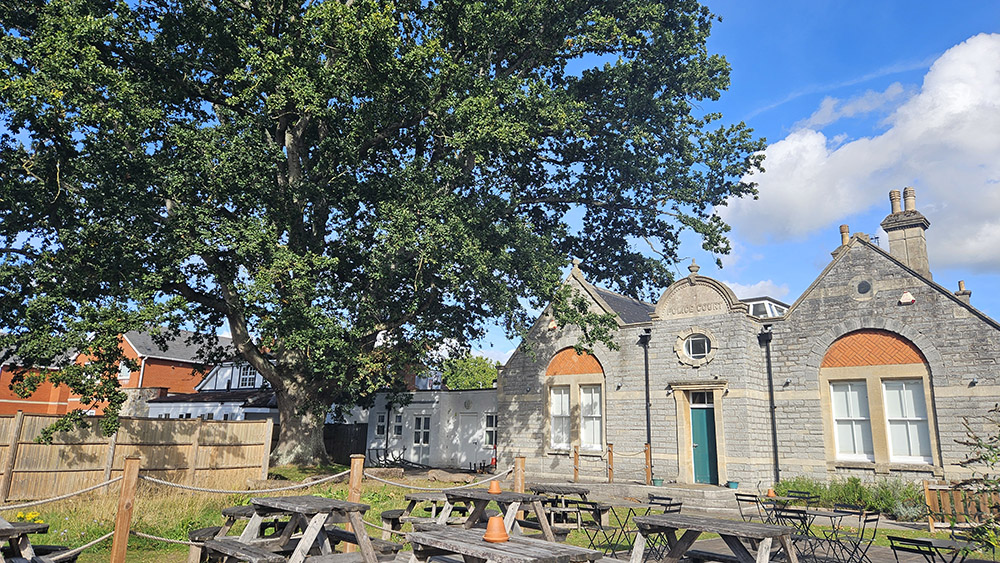
To reach the final stops on this tour, we continue down Benedict Street, noting the yew tree and hedge of the property on the right and enjoying the notable oak in the garden of the old police station, now a cafe, perhaps stopping for coffee if it’s open! The next left will take us to a second large oak and the climax of our tree tour.
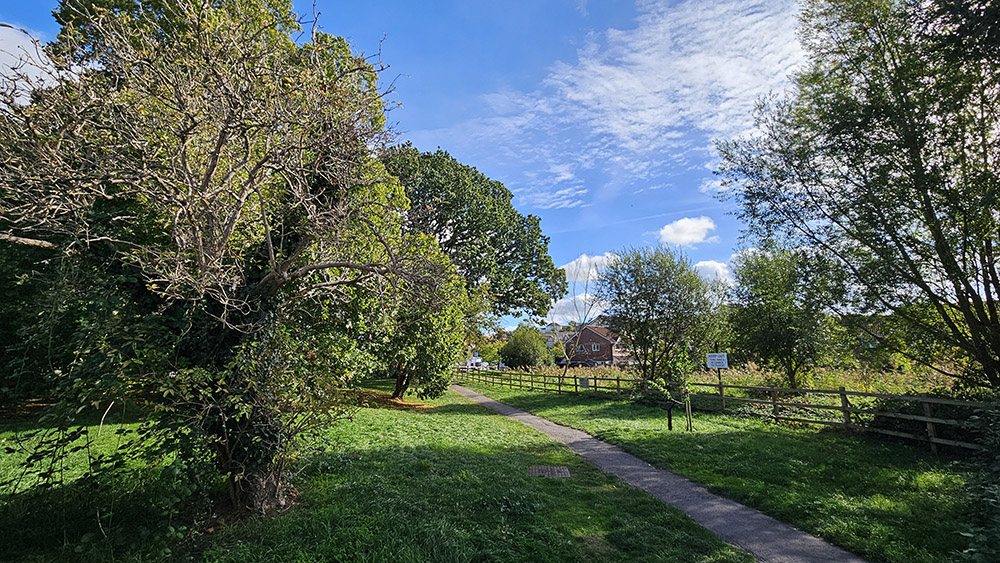
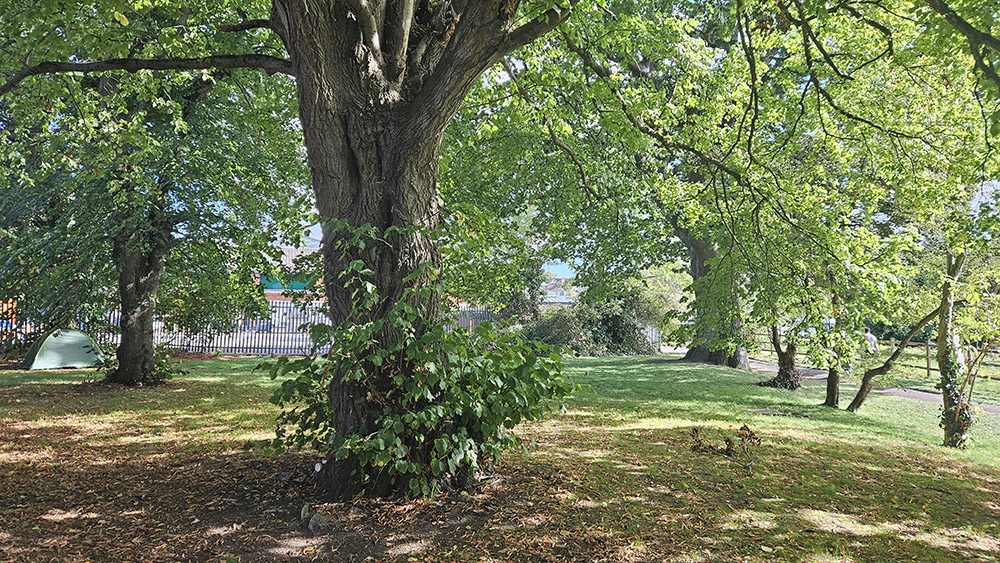
At the end of Fairfield Gardens, there is a green space that is home to a number of mature limes, a row of scrappy thorns and the relics of an elder growing out of an old gatepost that hints to the previous use of this land as open pasture.
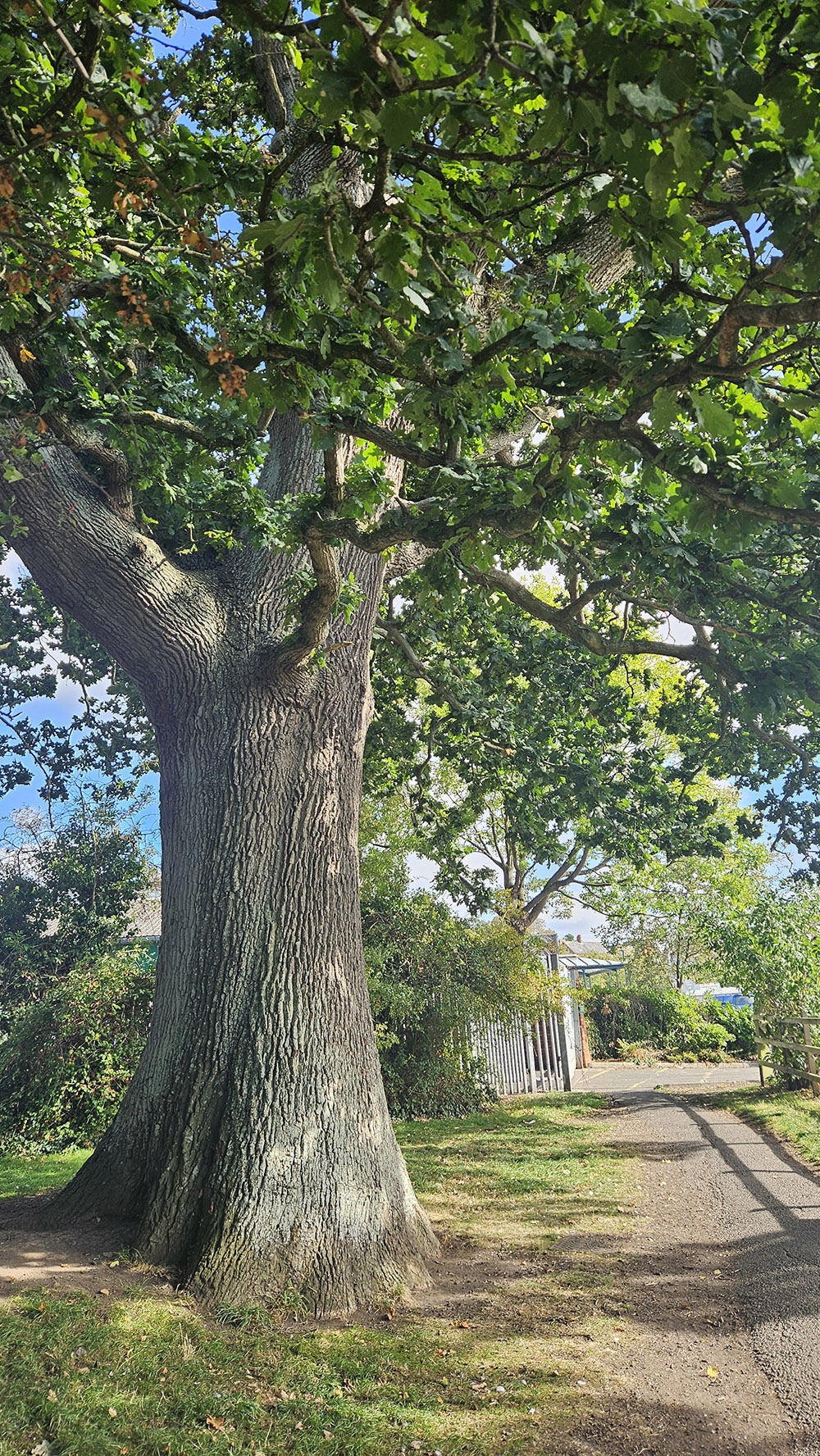
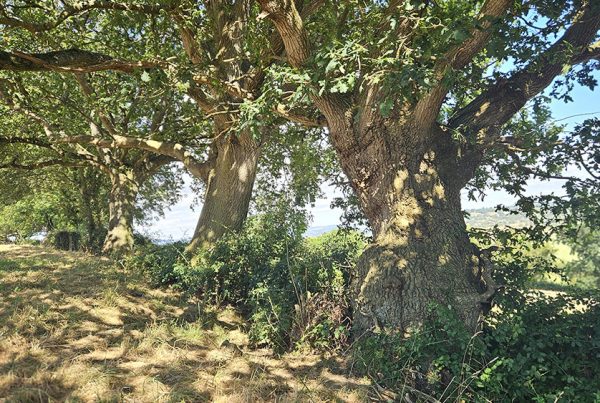
 Most notable on this patch is the four-metre-girth English oak which stands next to the path. This tree and the limes at the back of the supermarket are all that remain of what was once The Fairfield, home to the famous Tor Fair. I was once told that they cut down trees to build the supermarket, but from the view provided in the accompanying photograph, it appears that they in fact saved them, placing the building on the diagonal and leaving room for the trees behind.
This grand oak and the one at FARA are the largest oaks in the town centre, are possbley of a similar age, and seem to stand as a pair, either side of the church, like an Western gateway into the town.

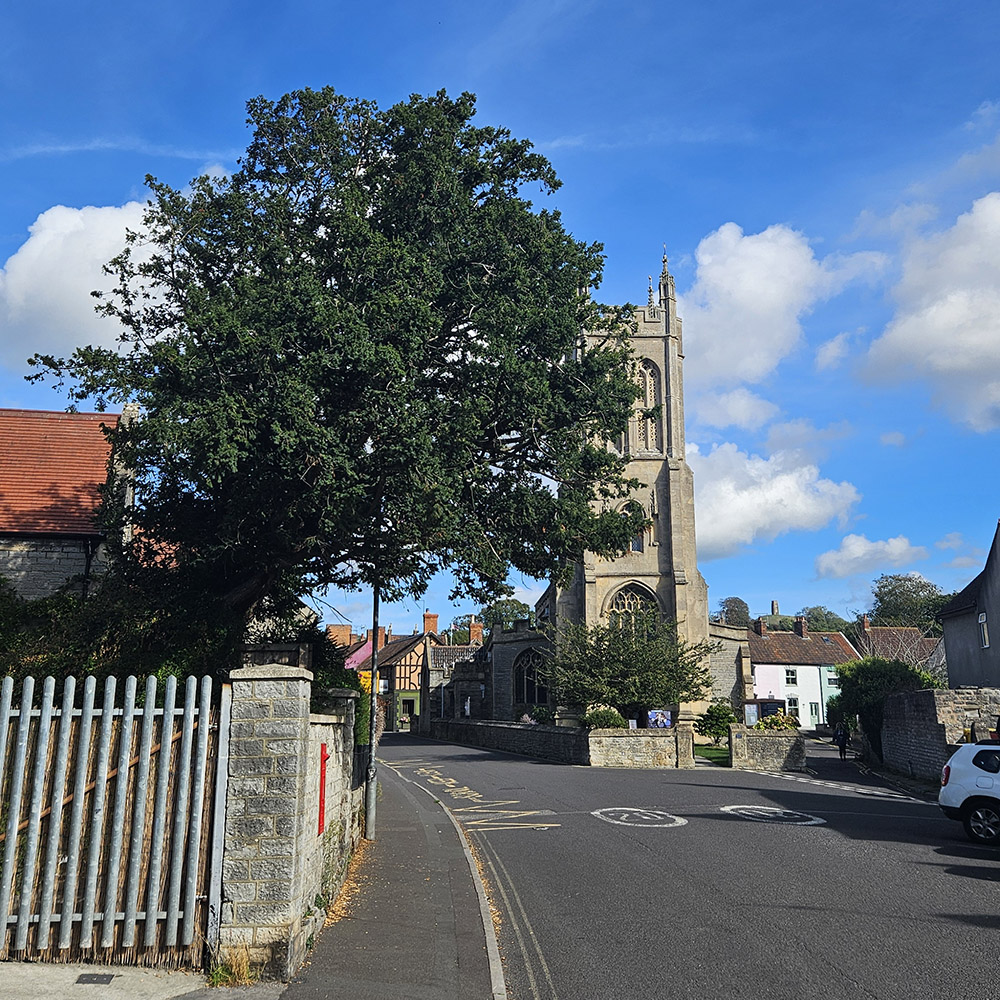
Our route back to the town centre leads us through Morrisons car park, home to a number of red oaks and raywood ash trees in various states of distress. We pass the garden of Copper Beech and see the large canopy of its namesake, as well as the younger copper beech which may have been planted as a successor.
Following the alleyway around St Mary’s Church, we find ourselves back on Magdalene Street to enjoy a view of the larger trees rising around the Abbot’s Kitchen within the Abbey grounds. From the road we can easily spot a number of mature beech trees, a tulip tree and a Cappadocian maple.
 To bring our tour to a close, there are two last trees to mention. Near to Glastonbury information centre, a recently planted oak sits on the green behind the bus stop in front of St Dunstan’s car park. This is a variety of English oak called ‘Pencil Oak’, Quercus robur ‘Fastigiata’, a cultivar that has tight upright growth habit. It was planted in December 2021, on the day of the Holy Thorn Cutting, as part of the Queen’s Green Canopy for Elizabeth II’s Platinum Jubilee.
The cultivar originated from a single fastigiate tree growing in Harreshausen in Hesse, Germany, known as the Schöne Eiche, the ‘Beautiful Oak’, which is 550–600 years old. Glastonbury’s young pencil oak tree is notable for its cultivar, its dedication, and because substantial new trees are not planted in the town centre very often. I would add that the fastigiate habit will cause it not to have an open canopy like a standard English Oak, and makes the tree more suitable for town centre planting.
Lastly, the final stop on our tour. When the Information Centre is open, one can visit the beautiful Peace Garden to meet a fifth and final Holy Thorn, standing in view of the ruins of the Abbey’s Lady Chapel, the perfect place to stop for a rest and to consider the trees we have met and how they hold tales of the town’s heritage.
Many of the trees we meet in town may not have the great age or stature of some of those found on the outskirts of Glastonbury, but they are the trees amongst which the everyday life of the town takes place. They beautify our spaces, shade our streets and peer over walls while brightening our car parks and alleyways. In the case of the older trees, they have seen a drastic change in their environment as more of the open fields and green spaces in and around the town are swallowed up, they stand as valuable islands of greenery amidst the encroaching concrete and brickwork.
This tour includes only 37 of the town centre’s trees for your enjoyment all within about 5 minutes walk of the town centre. The accompanying map labels the trees and leaves the route up to you. The list of trees is very selective and far from exhaustive; many smaller trees can be found hidden in gardens upon the route. I hope you find this article a neat companion guide on your adventures to the trees of Glastonbury town centre.
TREE WALK DATES
Autumn Walks
Sep: Sun 27th
Oct: Sat 3rd, Sun 11th, Sat 17th, Sun 25th
Nov: Sat 7th, Sat 14th (last of season)
Meet at the gates to St John’s Church on Glastonbury High Street at 11am – £10pp.
RSVP: 07548 936 081
Private walks are available to book at a date and time to suit you – Book.

VISUAL DIARY